Snakes, Scorpions and Spiders in the UAE Desert: A Herper's Guide to Staying Safe
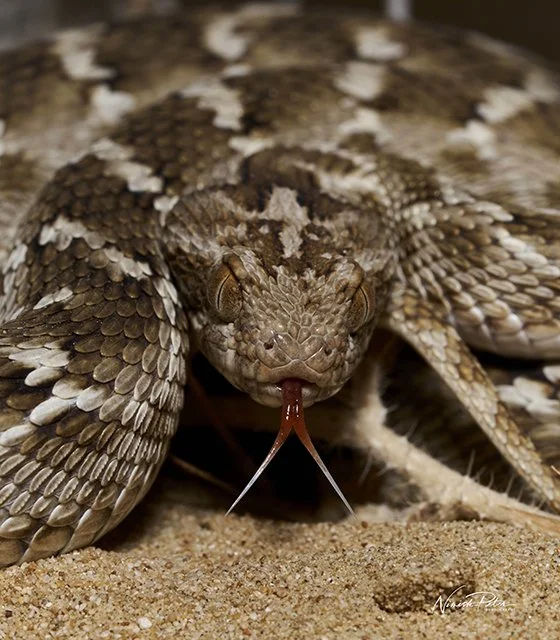
Saw-Scaled Viper (Echis carinatus) – Dubai, United Arab Emirates
I have spent years out in the Arabian desert at the hours most people avoid — dusk, midnight, the grey light before dawn -photographing the snakes, scorpions and spiders that come alive after dark. And the one thing I want you to take from this guide is simple: these animals are not out to get you. In all my time in the field, almost every bite or sting I've heard of happened the same way — someone reached into a place they couldn't see, or tried to pick something up they should have left alone.
The UAE desert is one of the most rewarding places on Earth to explore. But if you're heading out to camp, hike, or just wander the dunes this summer, a handful of habits will keep both you and the wildlife safe. Here's everything I've learned, in plain terms.
What Venomous Creatures Live in the UAE Desert?
Knowing what's actually out there takes the fear out of it. The UAE has around 13 native snake species, but only a few are a genuine concern — chiefly the vipers, including the saw-scaled viper and the Arabian horned viper, along with the Arabian cobra. Most snakes you'll cross paths with would much rather slip away than confront you.
On the scorpion side, the one to respect is the Arabian fat-tailed scorpion (Androctonus crassicauda) — a thick-tailed, nocturnal species whose sting is medically serious, especially for children and older adults. You may also see the more common Hottentotta jayakari in rocky, mountainous areas.
For spiders, the widowspider (a relative of the black widow) is the notable one. It tends to settle near homes, gardens and pool areas rather than out in open sand. Camel spiders look terrifying but are neither venomous nor a real danger — they're all bark and no bite.
The takeaway: serious bites are rare in the UAE, and they are almost always avoidable.
How to Avoid Snake, Scorpion and Spider Bites: The Essentials
These habits cover all three, and they're the foundation of desert safety.
Look before you step, sit, or reach. Never put a hand into a hole, crack, or under a rock you can't see into. This single rule prevents most bites.
Wear proper footwear. Closed, ankle-high desert boots protect you from hot sand and from anything underfoot. Never go barefoot or in open sandals, especially after dark.
Dress for the terrain. Long trousers and sleeves matter in rocky or vegetated areas. Snake gaiters are worth it if you're going off-trail.
Shake out your gear. Before you put on shoes, gloves or a hat — or climb into a sleeping bag left out overnight — give it a firm shake. These are classic hiding spots.
Carry a torch at night. The desert wakes up after sunset. A flashlight lets you see your path before you commit to it.
Keep your campsite clean. Food scraps and clutter attract rodents, and rodents attract snakes. Store firewood well away from where you sleep.
Don't disturb wildlife. Never try to handle, move, or provoke an animal — even one that looks dead. Curiosity is how people get hurt.
Stay on the trails and avoid wading through tall grass or thick brush where the ground is hidden.
Step over, then look. Crossing a log or boulder? Step onto it and check the far side before stepping down.
Snake Safety: Where They Hide and How to Avoid Them
Snakes are experts at staying out of sight, and nearly every encounter is accidental.
Take extra care around rocks, logs, firewood and bushes — their favourite resting spots.
Keep your hands out of holes and crevices you can't see into.
Check under bushes and trees before you sit.
When camping, sleep raised off the ground in a tent or on a cot. Rolling onto a snake in your sleep is a surprisingly common cause of bites, and a tucked-in mosquito net adds a useful barrier.
If you see a venomous snake near a home or campsite, don't try to deal with it yourself. In the UAE, the licensed Civil Defence wildlife unit will relocate it safely — for both your sake and the snake's.
Scorpion Safety: They Come Out at Night - Scorpions are nocturnal hunters and easy to miss.
Be most alert after dark, when they're active.
Clear away rock piles, lumber and debris around your camp.
Carry a UV black light — scorpions glow brightly under it, which makes checking your tent and surroundings at night almost effortless.
If you must move one, use tongs and keep your distance. Never handle it by hand.
Spider Safety: Check Your Shoes - Spiders like dark, undisturbed corners — indoors and out.
Wear gloves when gardening, shifting rocks, or carrying wood.
Shake out shoes, gloves and hats before putting them on — redbacks in particular like to tuck into footwear.
Keep living and camping spaces clean; regular cleaning removes both spiders and the insects they hunt.
First Aid: What to Do If You're Bitten or Stung
Get to a hospital immediately for any suspected venomous bite or sting, particularly if symptoms are severe or getting worse. In the UAE, call 998 for an ambulance or 999 for police. Government hospitals are the place to go — they carry antivenom.
Stay calm and still. Slowing your movement slows the spread of venom.
Move away from the animal to avoid a second bite.
Remove anything tight — rings, watches, snug clothing near the bite — before swelling starts.
Clean the wound gently with soap and water and cover it with a clean, dry dressing.
Snake bites: keep the limb still and note the time on your phone or skin. Marking the edge of the swelling helps doctors track the venom.
Scorpion and spider: a cloth-wrapped cool pack for 15–20 minutes eases pain and swelling.
For pain, paracetamol is generally safe — avoid aspirin with snake bites.
What NOT to Do
Don't try to catch or kill the creature. Snap a photo from a safe distance instead — it helps doctors identify the species and choose the right treatment.
Don't apply a tourniquet, cut the wound, or try to suck out venom. These cause more harm.
Don't put ice directly on a snake bite or soak the wound.
Don't drink alcohol or caffeine.
Don't scratch a scorpion or spider sting.
Don't wait for symptoms before seeking help if you suspect a venomous bite.
Frequently Asked Questions
Are snakes, scorpions and spiders dangerous in the UAE? A few species are medically serious — the saw-scaled viper, Arabian horned viper, Arabian cobra, and the fat-tailed scorpion among them. But bites and stings are rare, and most happen only when an animal is cornered or handled. Treat them with respect rather than fear.
What is the most dangerous creature in the UAE desert? The Arabian fat-tailed scorpion is often considered the most medically significant, with venom that can be serious for children and the elderly. Among snakes, the vipers warrant the most caution.
When are desert creatures most active? Most are nocturnal, emerging from dusk through the early morning to escape the daytime heat — which is exactly when campers tend to be moving around. Extra caution at night is the most important habit you can build.
What should I do if I find a snake or scorpion near my home or camp? Keep everyone clear, don't try to catch or kill it, and call the licensed Civil Defence wildlife unit to relocate it. Most bites happen when people attempt to handle the animal themselves.
Are camel spiders venomous? No. Despite their alarming appearance, camel spiders are not venomous and pose no real threat to people.
A Final Word from the Field
The desert isn't something to fear — it's something to learn to read. Spend enough nights out there and you start to understand the rhythms of the creatures that live in it: where they shelter, when they move, and how to share the landscape without conflict. Respect those rhythms, follow a few sensible precautions, and the Arabian wilderness becomes one of the most extraordinary places on the planet to explore.
Stay safe, stay curious, and tread lightly.
Nimish Peter is a naturalist, herpetologist and wildlife photographer based in the UAE, documenting the hidden lives of the region's reptiles, arachnids and desert fauna.