Ecdysis: How the Arabian Cat Snake Sheds Its Skin
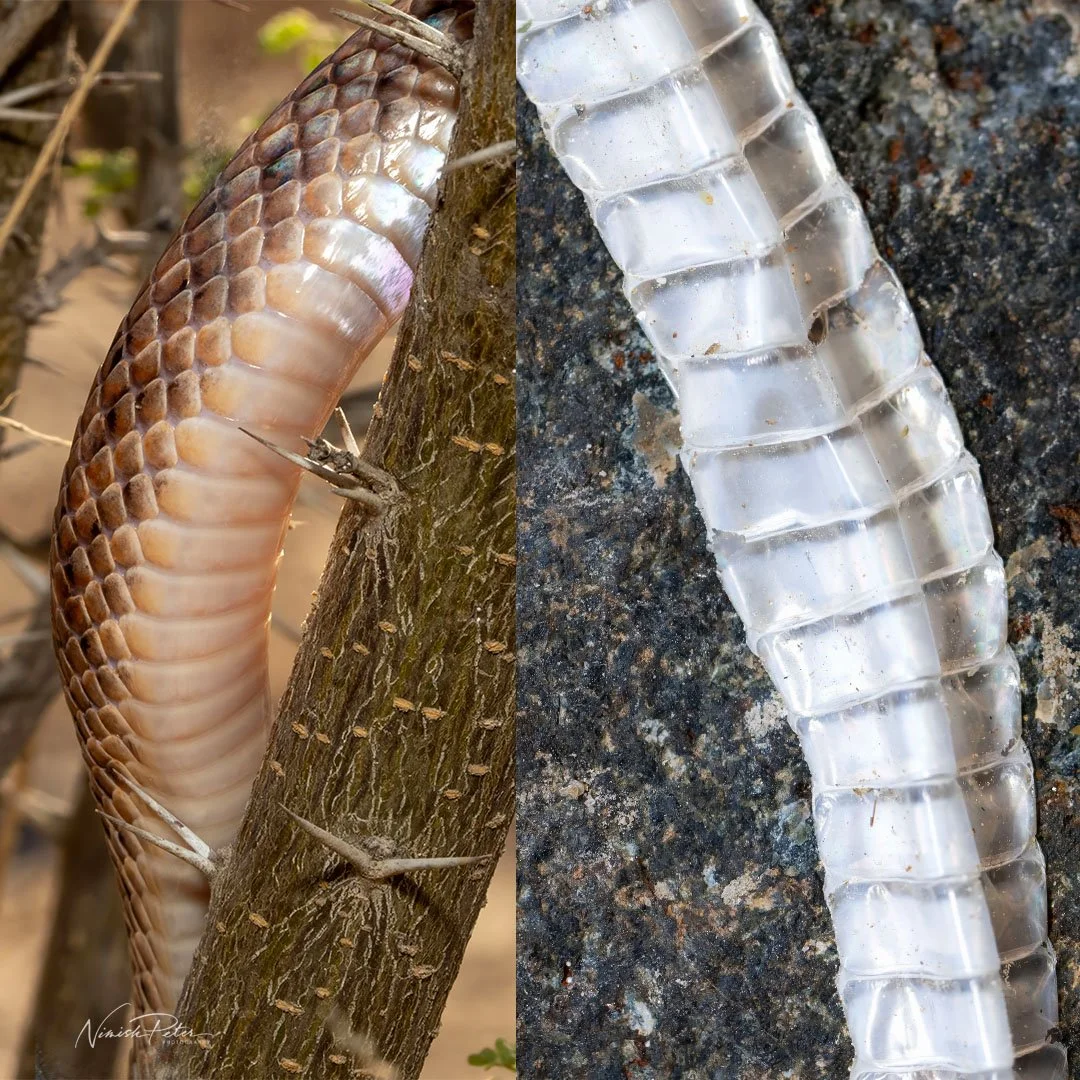
Arabian Cat Snake (Telescopus dhara), United Arab Emirates
The Arabian Cat Snake (Telescopus dhara) is a remarkable reptile native to the Arabian Peninsula and surrounding regions, including the United Arab Emirates. One of the most fascinating aspects of its life cycle is ecdysis — the process of skin shedding — which plays a crucial role in the snake's growth, health, and survival.
What Is Ecdysis?
Ecdysis is the periodic shedding of a snake's skin, driven by factors such as age, growth rate, and environmental conditions. Young Arabian Cat Snakes shed frequently, sometimes every few weeks, while adults typically shed only a few times a year. The process begins when a new layer of skin forms beneath the old one, causing the outer layer to loosen and eventually detach.
Signs That an Arabian Cat Snake Is About to Shed
Before shedding, the Arabian Cat Snake shows several telltale signs. Its colours may dull, and it can become more irritable than usual. One of the clearest signs is cloudiness in the eyes, which occurs as the protective scale covering each eye loosens in preparation for shedding. During this period, the snake often seeks out a safe, sheltered spot to shed undisturbed.
The Shedding Process
The shedding itself can take several hours. To work the old skin free, the snake rubs its body against rough surfaces such as rocks and branches. Once complete, it emerges with a fresh layer of skin — usually more vibrant in colour — which improves its camouflage and helps it regulate body temperature more effectively.
Why Shedding Matters
Shedding is vital to the Arabian Cat Snake for more than just growth. Old skin can harbour parasites and bacteria, so ecdysis is essential for keeping the snake clean and healthy. The newly revealed skin is also more sensitive, sharpening the sensory perception the snake relies on to hunt and navigate its environment.
A Remarkable Desert Survivor
The shedding of skin in the Arabian Cat Snake is a vital biological process that supports its growth, health, and survival in the wild. This adaptability and resilience highlight just how well this species is suited to life across the Arabian Peninsula and the UAE.
For more stories on rare wildlife in the United Arab Emirates and the unique creatures that call this region home, stay tuned to the blog.